Welcome to the Little Known World of Canadian Cartooning
LYNN JOHNSTON: Born in Collingwood, ON., Lynn certainly belongs to this page, as one of our all-time greatest Canadian cartoonists, but it should be noted that her story is not a typical one. In fact, her success story is the exception to what appears to be the rule of the industry in Canada.
A divorced mother, Lynn gambled on a freelance career in commercial art and took on a part-time job as a medical illustrator. She published a book called "David, We're Pregnant", viewed by Universal Press Syndicatbe, who quickly offered her a contract. Johnston signed a development contract with Universal, moved with her son and husband Rod Johnston (whose aspiration was to become the "flying dentist") to Lynn Lake, Manitoba.
In her 30+ years of comics, Johnston became one of the most successful cartoonists in the history of the medium. She became the first female president of the National Cartoonist Society and successfully lobbied to have Toronto host the first Reuben Awards outside of the United States and I guess, one of the first outside New York City.
For Better Or For Worse featured the Patterson family, who aged like ordinary mortals. a concept which was seen as edgy for the time. Johnston's target audience was the modern North American family, but in her career, she explored many "non-comic" issues, such as homosexuality, marital infidelity and even death.
Despite higher Canadian income tax rates, Johnston and her six-figure salary proudly remained in Canada, living for many years in Lynn Lake, MB, Callander, ON near North Bay and now in semi-retirement on the Canadian Pacific coast. She fearlessly included Canadian town and city names in her For Better Or For Worse strip, which is still internationally syndicated. She has never shrunk from her Canadian heritage and now re-entering single-dom, Lynn Johnston continues to wear it proudly before an adoring world.
An engaging and educational interview with Johnston (part 1 in a series of 6) is viewable at the link above. Enjoy!
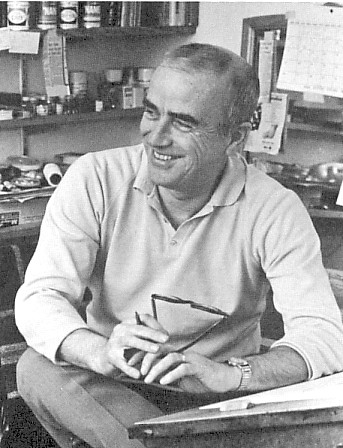
DOUG WRIGHT: Creator of many features. Took over JUNIPER JUNCTION from Jas. Frise. Best known as creator of NIPPER and DOUG WRIGHT'S FAMILY. Also created comic strip features WHEELS and TICKYTACKY TOWNSHIP for a Canadian feature syndicate. One of my greatest thrills was being permitted to see some of Wright's JUNIPER JUNCTION strips, in the late 1980s. Perhaps revealing the entire problem with Canadian comic strips throughout history, the strip's rightsholder confessed "It is wonderful work, but no one wants it".

STEVE NEASE: Top Canadian self-syndicated editorial cartoonist and creator of the comic strip PUD. An earmark of Canadian cartooning is the fact that in more cases than not, an artist's features do not earn enough money for them to do it full time. For decades, Nease's "day job" was art director for the Oakville Beaver, toiling at his editorial and strip cartoons in his spare time. He has been working as a independent cartoonist since 2008.
Nease has won reams of accolades and awards from the Canadian and Ontario Community Newspaper associations. In 2007, one of his editorial cartoons won a prize at the Suburban Newspaper Association of North America.
His work also graces former Hockey Night In Canada announcer and prolific author, Brian McFarlane's book, "Real Stories From The Rink."
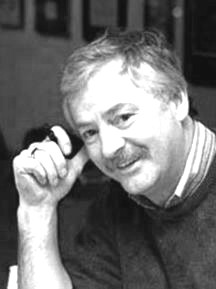
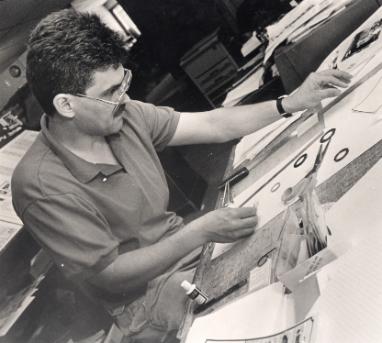
JEFF WILSON: Self-syndicated features "Flatt's Farm," "The Avridge Farm" and the short-lived "GLORT!" for publications across Canada. 1995, Wilson drew the "Elmer E. Quipment" panels (co-created with then-editor, Mike Anderson) for the Equipment Journal.
Wilson began his professional career doing storyboards for the 1980 Canadian classic feature film, "Prom Night" and was later a key animator on the 1987 TV cartoon, "Adventures of Teddy Ruxpin." He moved to Collingwood in 2007 and during that area's boom of "simple, explanatory video" firms, employed briefly as an animator.
For almost 30 years, Wilson's spot illustrations have appeared in the "Active Living" newsletter for fitness professionals. Like Steve Nease, his day job is graphic designer for a community newspaper "plus whatever else I need to do to keep food on the table".
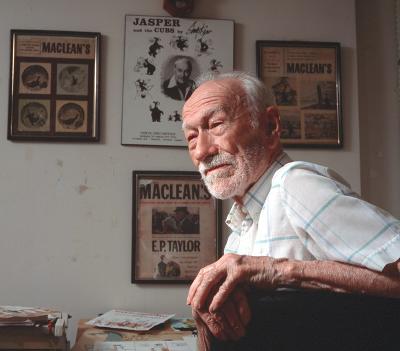
JAMES SIMPKINS- The Winnipeg-born creator of the comic strip "JASPER" began his career as one of the NFB's original artists, before starting a successful freelance career. His iconic cartoon bear became famous throughout Canada from 1948 through 1972, having run in many newspapers in Canada and the U.S., including a 20-year run in the Canadian newsmagazine, Macleans. At age 93, Simpkins died in Dundas, Ontario, typically never receiving the recognition he richly deserved. Sadly, both Simpkins and JASPER went completely unmentioned in Maclean's 50th Anniversary issue.
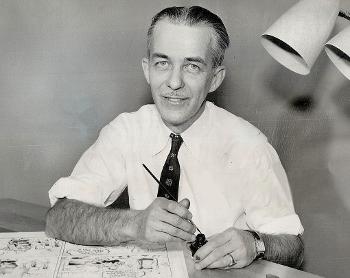
WALTER BALL- Created the longtime Toronto Star Weekly comic feature RURAL ROUTE in the 1950s for 12 successful years. Ball grew up on a farm near Cookstown, Ontario and had the pleasure of getting to know legendary Canadian cartoonist Jimmy Frise, while co-workers at the Star. When Frise left for the Montreal Standard in 1947, a gaping creative hole emerged in the publication. During the Star Weekly's planned 1956 conversion to a sleeker tabloid format, Ball's help was sought in finding an artist. He suggested a few names, but confessed a deep desire to enter the field himself. Like Frise before him, Ball became a major Canadian cartoonist without even a day of formal art training. When the Star Weekly ended publication in 1968, so ended Ball's production of RURAL ROUTE, but in reruns the strip was carried by Miller Features Syndicate and distributed to a handful of Canadian and U.S. newspapers thereafter. Ball worked in the Star's art department and was promoted to art director in 1970. By this time living in Richmond Hill, Ball retired from the Star in 1976 and lived there with his wife until his passing in 1995. At time of writing, a permanent collection of RURAL ROUTE comic strips was being maintained at the Grimsby Public Art Gallery in Grimsby, ON.
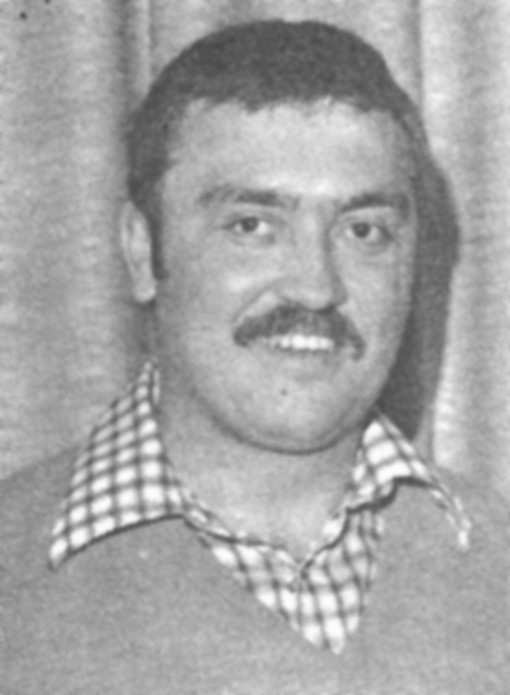
TED THORNLEY - A Waterloo, ON police officer, who concurrently travelled his beat and drew a regular comic feature for his precinct's internal newsletter. Ted's plan to publish a book of his police cartoons ended with his untimely 2000 death from a heart attack. He was president of the Waterloo Regional Police Association at the time.
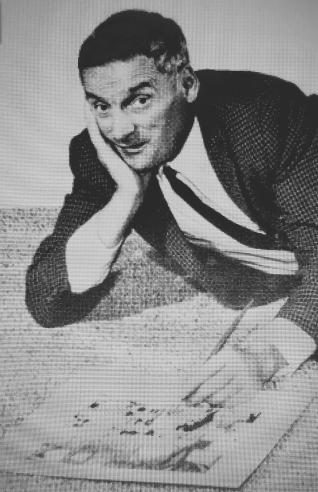
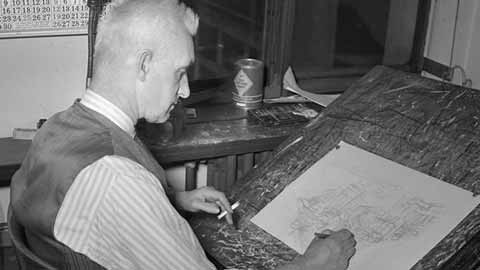
JIMMY FRISE: Creator of BIRDSEYE CENTER with the Toronto Star and Star Weekly, where he also illustrated articles and books with columnist Greg Clarke. In 1947, both Frise and Clarke left the Star's employ for a variety of reasons. When the Star refused to give up copyright to BIRDSEYE CENTER, Frise created the fully-coloured JUNIPER JUNCTION for the Montreal Standard (later Weekend Magazine), before dying suddenly in 1948. Doug Wright (see left) succeeded him on the feature.
When BIRDSEYE CENTER was in its prime, a reader survey of Toronto Star comics (comprising such great U.S. strips as "LIttle Orphan Annie", "Mutt 'N Jeff", "Toots 'N Casper", etc.) rated Frise's strip as the #1 reader choice. Making this result more impressive, the strip wasn't even listed among the choices, winning as a write-in entry.
Next to Lynn Johnston, Frise is generally acknowledged as one of Canada's great cartoonists.
Dr. JACK KENNEDY: Cartoonist from Mount Forest, ON. Creator of CORK N' BEANS. The late Kennedy, a full-time Mount Forest dentist, had his feature published in different publications nationally across Canada.
In the late-1980s, CORK 'N BEANS became a staple in the west Grey County publication "The Durham Crocodile" (later The CITIZEN, serving Grey and Bruce counties, Ontario) but knowledge of CORK 'N BEANS remains obscure to most comic strip fans today.
I recall the day when Citizen publisher George Benninger showed me several boxes of beautifully printed and expensively bound "Cork N" Beans" books he had somehow acquired. Mystified, he looked at me and said, "All these beautiful books...but who'll buy 'em?"
BRIAN FRAY: Professor of the arts, specializing in the cartooning art form, in a university in the Kitchener Waterloo area, as well as creator of the 1980s syndicated comic strip, LE GRAND CHEF PIERRE.
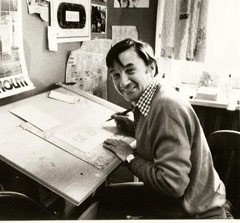
Wicks joined Doug Wright as anomalies in Canadian Comics, with their names becoming marketable enough to use in titles of their features, later creating "Ben Wicks", Wick's Week" and "Wicks."

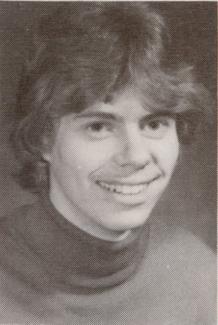
PAUL CURTIS- A comic strip artist born, raised and still residing in Dundas, ON. Paul had an interest in cartooning from an early age and was accepted into the short-lived Cartooning & Graphic Story Arts course at Sheridan College in 1977. Curtis' name was listed among the final graduates when the course folded in 1979. Curtis created the comic strip "ROSCOE & COMPANY" in a class project while attending Sheridan and the feature was later published in the McMaster (University, Hamilton) Silhouette in the 1980s. The strip was rejigged and retitled "SHAMUS T. ROSCOE" later in the nineties, but was never accepted by a syndicate or publisher. Paul's editorial cartoons were gaining a following however and became a regular staple of Hamilton/Burlington area many community newspapers from the 1980s through the 1990s. Through his primary job with the Canadian Mental Health Association, Paul has used his considerable cartooning, humor and writing skills to benefit those afflicted with mental health issues.
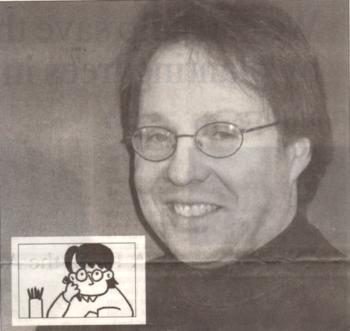
PAT CALLAGHAN: Editorial Cartoonist for the Owen Sound Sun Times. In his early years, Pat lived in Arthur, ON. Part of a group of Owen Sound cartoonists who exhibited at "Cartoonists At Work" at the Tom Thomson Gallery in the autumn of 1993. A member of the Association Of Canadian Editorial Cartoonists, Pat's earns the lion's share of his income as a sign-painter and freelance graphic artist.

CHRIS FOURNIER- Created the comic feature SKINNER'S BLUFF in the early to mid-1990s, while living in Port Elgin, Ontario. Became a part of the local cartooning scene, having his feature appear in various places in that part of Ontario. Fournier spearheaded the formation of "SIX CANUCKS", a "dream team" of six talented Canadian cartoonists aiming to be a syndicated comic phenomenon in Canada, but neither publishers or publications ever appeared to warm up to the idea. A highly motivated entrepreneur, Fournier started up his own fledgling t-shirt and custom specialty business in the late nineties and became heavilly involved with "Wiarton Willie" branding and marketing. Many of the images and promotions he developed remain in place there today.
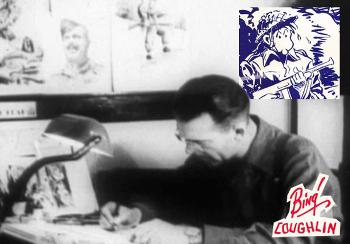
WILLIAM GARNET "BING" COUGHLIN - Canadian-born (though U.S. trained) creator/illustrator of "Herbie" for the Canadian military daily newspaper, "The Maple Leaf." The feature became so popular, it actually appeared in hundreds of civilian Canadian periodicals. Just as Leo Bachle's "Johnny Canuck" became Canada' heroic face of the war (like "Captain America" was for the republic to the south), "Herbie" became our version of "The Sad Sack," exploring the foibles of "every-soldier." When the war ended, Coughlin left the cartooning field altogether, repatriating to Canada and joining the promotion/design team at the Canadian National Exhibition, eventually retiring to the Philadelphia area, where he originally learned and honed his craft.